
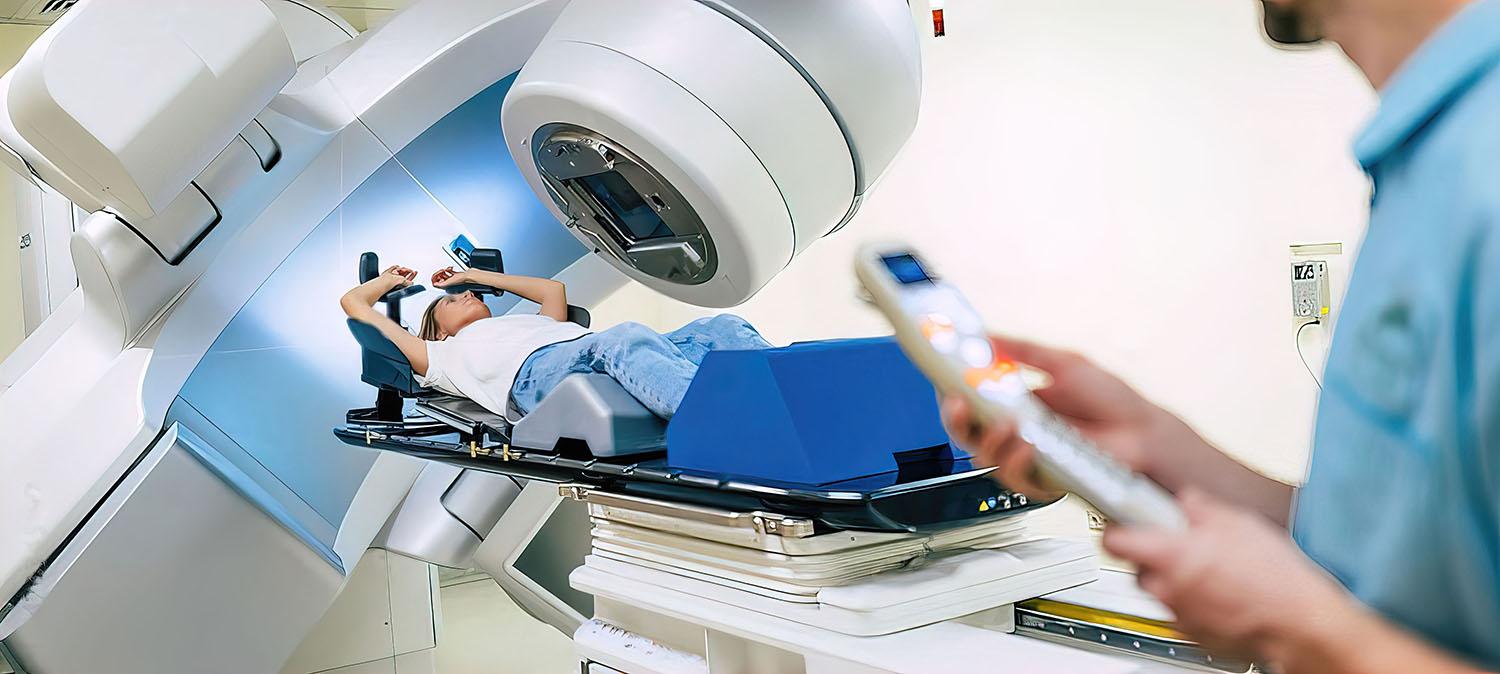
Radiation Oncology
Radiation oncology and radiation therapy are medical specialties that use radiation to treat benign and malignant tumors. As a radiation oncologist and urologist in my private office, I am familiar with the work and advances in radiation oncology.
Radiation therapy is used to treat certain benign tumors as well as specific non-cancerous conditions. Benign tumors that may be treated with radiation include brain tumors such as meningiomas, acoustic neuromas and pituitary adenomas, as well as benign thyroid tumors such as nodular goiters or autonomous nodules. In these cases, radiation therapy aims to control tumor growth and relieve symptoms while sparing the surrounding healthy tissue. Treatment plans are tailored to each patient and tumor.
Radiation therapy may also be used for certain benign conditions to relieve symptoms and control disease progression. Examples include treating heel spurs to reduce inflammation and pain; omarthrosis (a form of shoulder osteoarthritis) to reduce inflammation and pain; and Dupuytren's contracture, in which thickened connective tissue in the palm causes the fingers to contract. In these cases, radiation therapy aims to reduce the thickening and improve hand function.
Another use of radiation therapy concerns induratio penis plastica (IPP), also known as Peyronie's disease. This benign condition involves hardening of the connective tissue in the erectile bodies of the penis. It can cause the penis to curve during an erection, as well as pain and sexual dysfunction. Targeted radiation to the affected tissue may help reduce the hardening and inflammation, improve the curvature, relieve pain and restore sexual function. Radiation therapy for IPP is generally delivered in a series of sessions over several weeks, with the dose and number of treatments tailored to achieve the best possible results.
Radiation oncology is used to treat many cancers, including prostate, bladder, lung and breast cancer, as well as brain tumors (stereotactic radiation). It may be used on its own or in combination with surgery and/or drug therapy.
Modern radiation techniques, such as proton and heavy-ion therapy, allow tumors to be treated more precisely and accurately, helping to better spare the surrounding healthy tissue. These advanced techniques are used especially for tumors in sensitive areas, such as the brain, and for children.
Radiation oncology works closely with other specialties, including urology. In some cases, surgery to remove a tumor may be needed before or after radiation therapy. Newer drug treatments, such as targeted therapies and immunotherapies, may also be combined with radiation therapy to improve treatment effectiveness.
As a radiation oncologist and urologist, I am committed to providing comprehensive care for patients with cancer. I work closely with radiation oncologists and radiation centers, and refer each patient to an appropriate center for the treatment best suited to them. I also support my patients throughout the treatment process. My goal is to provide a reassuring and supportive environment before, during and after treatment, including follow-up care, so that patients feel comfortable and well cared for.
Radiation oncology has made great progress in recent years. I keep up to date with the latest developments and technologies so I can offer my patients access to modern and effective treatments. Together with my team, I work to improve my patients' quality of life and offer them hope for recovery.
- As a former senior physician in Radiation Oncology and Radiation Therapy at the University Hospital Graz, I am available to you before, during and after radiation therapy. Expert consultation contributes to treatment success. Appropriate adjunctive medication, when used competently, is also decisive for the success of radiation therapy.
- Radiation therapy is not only concerned with malignant tumors but also with benign conditions such as heel spurs, tennis elbow, etc. I also offer my expertise in these cases and will refer you accordingly.